How to be a mom and dad?
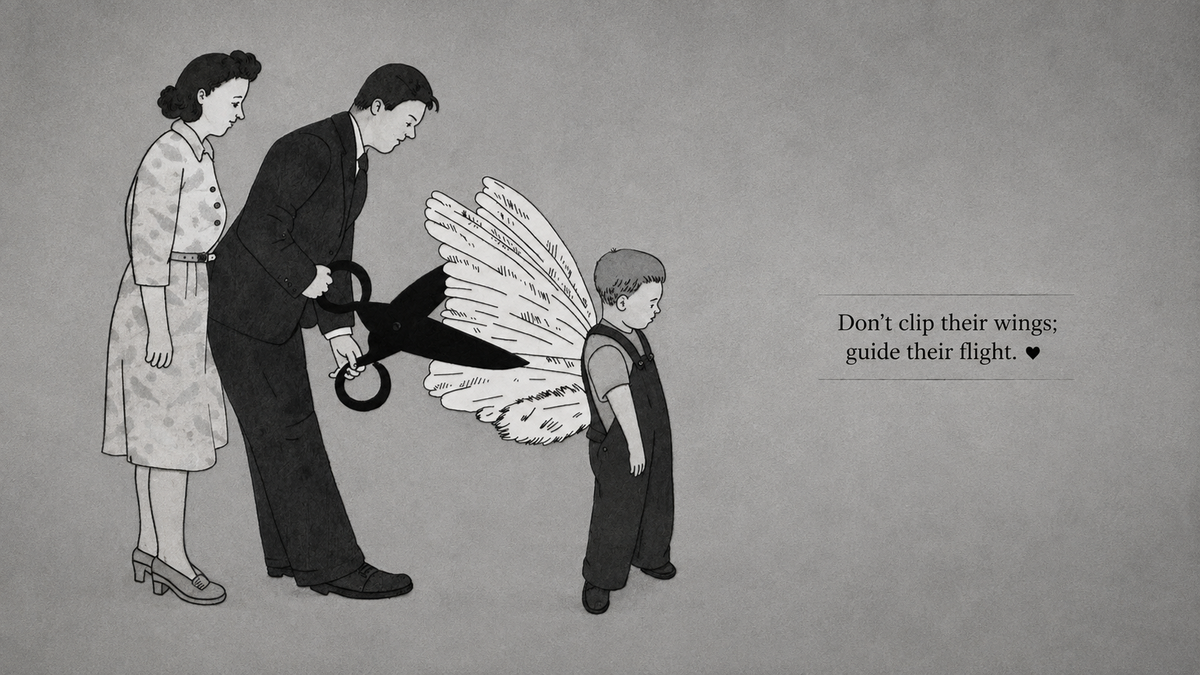
At the dawn of human history, during the Stone Age, the concept of parenthood was vastly different. Strong men had relationships with multiple women, resulting in many children. Often, only the mothers cared for the children, and over time, even those biological ties were sometimes forgotten. Yet, those children grew up to be fiercely respectful and protective of their parents. They did everything for survival—hunting, building shelters, and protecting their families with their strength.
Fast forward to the present time: modern parents know exactly what is good and bad for their children. Today’s children enjoy a life that is a hundred times better and more comfortable than in the Stone Age. So, why do so many children today lack respect for their parents in society? Instead of their respect growing as they age, it often decreases, and these children fail to understand the sacrifices made for them.
As a parent, you might wonder, "Did I do something wrong to make my child act this way?"
The truth is, no child is inherently bad for their parents. Parents shape their children into who they become—good or bad—through the moral values they instill in them.
If you think providing "moral values" simply means giving your child perfect resources—like a good education, healthcare, and the best college—you are completely wrong. Providing these things is your basic responsibility, not a favor. If you treat raising your child as a favor, your child will eventually treat you the same way. When they grow up, they might just send you money as a "favor." They won't truly love you; they will only claim to care while secretly viewing you as a liability and a waste of their time and money.
Understand this: if you want your child to be respectful and truly successful in life, you must deeply work on raising them.
In today's world, many parents do the bare minimum. They bring a child into the world, provide basic resources, and then just sit back in their chairs, only checking report cards every month. If the child gets good grades, the parents assume they will be successful, and society tells them their child will make them proud.
But this is a massive mistake. How can you look at a single piece of paper and determine whether a human being will be successful or unsuccessful in life?
For your children to become truly successful, they need to work on themselves—and your role in guiding that work starts from the moment they are born.
FIRST: Age 1 to 5. During these years, your only job is to care for and unconditionally love your children. This is the time they learn who their mom and dad truly are. If you only give birth to them but fail to show them love, you will just be names printed on their identity cards, not real parents in their hearts. At this age, simply love and care for them.
SECOND: Age 6 to 15. This is the most critical time to work on them. You must teach them right from wrong. Provide them with real-life lessons: if they do wrong things, punish them appropriately; if they do good things, appreciate and reward them. Do not get stuck in just one mode of being, only strict or only affectionate. You need a perfect balance of both. You must teach them:
- a) To respect absolutely everyone: Teach them never to discriminate based on skin color, financial status, or caste.
- b) To recognize their habits: Teach them what things are helpful for their growth, how to identify their bad habits, and why studying and learning are important for their future.
THIRD: Age 16 and Beyond. At this age, your children understand how the world works, but they will still make mistakes. However, this is no longer the time for punishment, because punishing them now will only turn them against you. Instead, you need to talk to them like a close friend. If you act like a friend rather than a strict parent, they will share everything with you, and you will understand their true feelings. At this stage, you can only advise them on what to do or avoid; the final choices must be made by them.
What NOT to do with your children:
- Don't constantly tell them what they cannot do: Putting constant limits on them is the language of people who are unsuccessful in their own lives.
- Don't dictate their life goals: You have no right to set their life goals. Let them decide what they want to achieve. If their goals are realistic and pursued the right way, your only job is to fully support and help them.
What you MUST tell your children:
- Share your real journey: Tell them about your hard work, your failures, and everything in between. Pretending you have always handled everything perfectly isn't true, and eventually, they need to know the truth so you don't feel burdened by a false image. Teach them your real life lessons.
- Give them ultimate assurance: Tell them clearly: "If you are right, I will fight the whole world to protect you. But if you are wrong, I will still stand by your side until the end of life."
UNDERSTAND THIS: YOUR BIGGEST PRIDE IS NOT YOUR MONEY—IT IS YOUR CHILD. THEY ARE WHAT YOU SHOULD TRULY BE PROUD OF.
You still have a choice.